Review: Ruby McCracken, Tragic without Magic, by Elizabeth Ezra

Ruby McCracken is a little witch with a big problem – she can’t do magic any more.
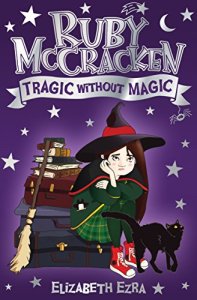
Ruby McCracken book coverWhisked from a world of broomstick flyways and spider egg breakfasts into the mundane setting of Ordinary World Edinburgh, she’s every bit as underwhelmed as her non-magical classmates – until she realises that there is more going on than meets the eye.

Ruby is an endearing, witty heroine whose whose frustrations – particularly at her parents (imagine your mum wearing her paper Burger Barn work hat all the time) – will resonate with young readers as much as her language does, and Ezra’s sense of fun abounds in the witchy details (like a dressing made out of frogspawn juice, curdled milk and a hint of powdered bat wing).

A great fit for readers looking to move on from the Worst Witch or Wrigglesbottom Primary, to something slightly spooky, but not too scary.

Ruby McCracken: Tragic without Magic, Kelpies (age 7 plus).
Review: Fir for Luck, by Barbara Henderson

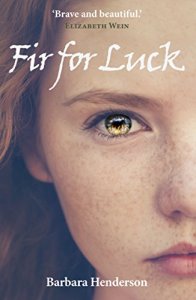
Fir for Luck is based on the true story of the township of Ceannabeinne in Sutherland, whose residents resisted eviction during the Highland Clearances – and paid a price.

Fir for luck book coverEvents unfold through the eyes of 12-year-old Janet, who – frustrated at being left behind when the men and boys go away to cut thatch – finds herself playing an unplanned, but pivotal role.
Barbara Henderson’s story encapsulates the outrageous injustice of the period, and, though written for children, it’s an excellent introduction to the Clearances for anyone. Dark events are sensitively presented, and there is also hope, and insight into the rich culture of that time and place.

Henderson is also the author of Punch, a story about travelling entertainers, set around Victorian Inverness (the author’s home town). She is starting to rival Kathleen Fidler in her skill at enchanting young readers with an insight into Scotland’s past.

Fir for Luck, by Barbara Henderson, Cranachan (age 9 plus)

Review: Larchfield, by Polly Clark

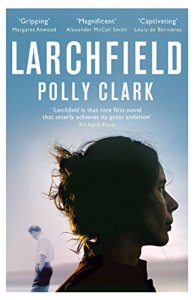
Poet and new mum, Dora, is finding adapting to life in modern-day Helensburgh almost unbearable. Her new home may boast an ocean view, but that can’t redress the loneliness or the corrosive presence of her neighbours.

Larchfield book coverThe discovery that Larchfield, a nearby school, was the setting for the early teaching career of poet WH Auden, gives Dora a thread of interest to cling to amid her isolated routine, and as she learns about the Stop All the Clocks writer’s life in Scotland, exploring his 1930s world offers a tempting alternative to her frustratingly mundane reality.
Polly Clark’s first novel vividly evokes the roller-coaster emotions of the new mother, whose fragile mental health and fierce love for her daughter must withstand the judgement of strangers. The fact that this contemporary story fits alongside an engaging account of Auden’s time in Helensburgh makes it all the more impressive.

We may anticipate from the start that Wystan (Auden) and Dora’s stories will intersect, but when they do, it is in a refreshing and unsettling way.

Larchfield, by Polly Clark (Quercus).

Review: The Treasure of the Loch Ness Monster, by Lari Don and Nataša Ilinčić

A new legend emerges

With so much folklore surrounding Loch Ness, its monster, and its most celebrated castle, one could suppose that there was little call for another re-telling of those stories, but The Treasure of the Loch Ness Monster, by children’s author Lari Don, offers something different.

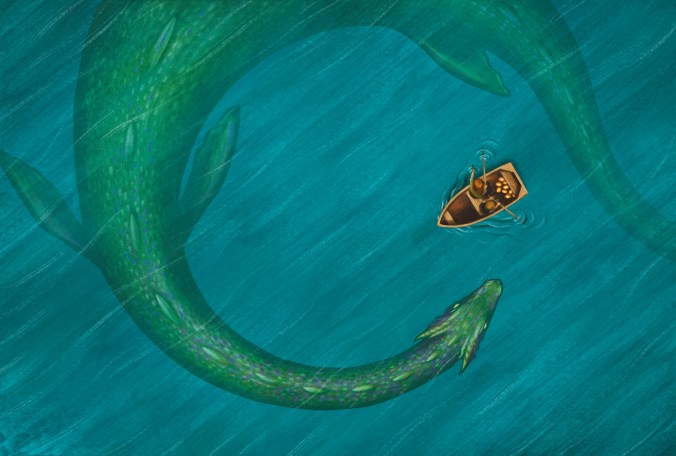
Nessie from book

The picture book, bewitchingly illustrated by Nataša Ilinčić, has the feel of a classic, but is a new story, weaving together two of the oldest Great Glen legends, and completely re-imagining them, crucially, with children at their heart.

Ishbel and Kenneth are hungry local children, who set out for Urquhart castle in the hope of discovering the treasure rumoured to be beneath it. Along the way they encounter magic, grave danger, and Loch Ness’s most famous resident. It is an eventful adventure, which remains loyal to its roots and striking setting.

Due for publication in March, this story will sit happily alongside Speed Bonnie Boat and the The Secret of the Kelpie, in Picture Kelpies’ Traditional Scottish Tales collection, a selection of picture books which are refreshing our folklore, and enabling its magic to enchant the newest of readers.

The Treasure of the Loch Ness Monster, by Lari Don and Nataša Ilinčić (Picture Kelpies)

Review: Eleanor Oliphant is Completely Fine, by Gail Honeyman

Eleanor Oliphant is Completely Fine, is nominated in the Costa first novel category, and has been heralded as one of the best debuts of recent times. Set in Glasgow, its oddball narrator, Eleanor, lives alone, works in an office where she is largely ignored, and spends her weekends working her way through two bottles of vodka – in other words, she is definitely not fine.

As the novel unravels, the prickly Eleanor becomes increasingly appealing, and we begin to gather clues about the trauma in her past that has caused her isolated and lonely existence.

Eleanor’s detachment from those around her, and her observations about them, can be humorous, but also cringe-worthy – while Raymond, a colleague who gradually befriends her, is consistently thoughtful, she misunderstands social convention, and is frequently rude in return.

On their first visit to a pub, she insists on buying the drinks so that she can “observe what happens on the inside of a public house,” but then calls to him as he leaves: “The Guinness, Raymond. It was three pounds fifty…there’s no rush. You can give it to me on Monday if that’s easier.”

Though the pace of the story is initially slow, and the humour not to every taste, there is plenty of lightness and kindness to offset the darker themes.

What is really compelling is how plausible the outwardly snooty Eleanor and her situation are – we might not identify with everything in her life, but the detail of her loneliness is uncomfortably familiar, and speaks to a universal fear of ending up the same way.

Eleanor Oliphant is Completely Fine, by Gail Honeyman (HarperCollins, £12.99)

Review: Under a Pole Star, by Stef Penney

Stef Penney’s Under a Pole Star is shortlisted in the Costa Awards novel category, and is the work of an assured author who has proved herself at her finest in the drama and beauty of a snowscape (her first novel, The Tenderness of Wolves, won the Costa prize more than a decade ago).

Flora MacKie is an arctic explorer in the 1890s – a time when women just didn’t do that sort of thing – and she battles every obstacle, from prejudice, to ice and isolation, to spend time in her beloved frozen north.

It is in these bleak surroundings that she makes the connections that will shape her life. First, with the local eskimo people who become lifelong friends, then the captivating Jakob de Beyn and the dangerously driven Lester Armitage, explorers whose fates are shaped, like hers, by arctic winds.

At the outset of the book, Flora is an elderly lady returning to the pole for a publicity event, and she is harried by a young journalist who wants to uncover the secrets of her past. “They’re all dead, except me,” she says. “What does it matter now?”

It matters very much to the journalist, and his persistence leads Flora to retell, and reconsider, her story – and it will send a shiver down your spine.

Under a Pole Star, by Stef Penney (Quercus £7.99)

Review: The Island and the Bear

Two picture books linked by the same Hebridean island offer an engaging introduction to local legends.

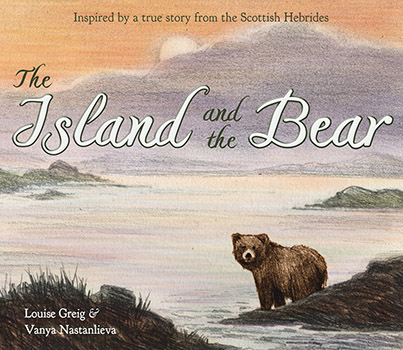
TheIslandandthebearcover

The Island and the Bear, by Louise Greig and Vanya Nastanlieva, is a rhyming story inspired by real events on Benbecula in 1980, when Hercules the bear went missing while filming an advert. Its illustrations, by Vanya Nastanlieva, capture the moods and shapes of the Hebridean coastline.

The story bear is a gentle giant whom the islanders soon realise means no harm to them or their livestock. This was true of the real Hercules too – he had been so used to cooked meat that he never hunted for himself.

Speed Bonnie Boat is a re-telling of the Skye boat song. The verses are brought to life through Alfredo Belli’s atmospheric illustrations, with simple historical explanations about Bonnie Prince Charlie and Flora MacDonald’s voyage from Benbecula to Skye, adding a welcome dimension.

Reader age: 6

The Island and the Bear, Louise Greig/Vanya Nastanlieva, Picture Kelpies, £6.99

Speed Bonnie Boat, Alfredo Belli, Picture Kelpies, £6.99