A yellow soft toy wearing red dungarees is poking his head out of a bag of books. The bag arrives at the home of a little boy, and within moments, the toy is spotted and pulled out for a cuddle. This is Bookbug, the mascot of the Scottish Book Trust’s early years programme, and he’s on a mission.

The Bookbug scheme, which is familiar to young families across Scotland, gives all babies a bag of books shortly after birth, and at other key stages in their early years, and runs song and story sessions in local libraries.
Launched in its current form in 2010, it is supported by a growing body of evidence about the value of sharing books and songs with the very young, helping with bonding and brain development, and building vital social and communication skills.
Despite the scheme’s broad early success, the team behind it felt that Bookbug (who was created by children’s author Debi Gliori) could be doing more to reach the children who needed him most – so they decided that it was time to head out of the library and into homes.
“We know that singing, rhyming and reading are beneficial,” explains Hazel Benzie, Early Years Outreach Manager for the Scottish Book Trust. “but we found that the families that most required the benefits of the Bookbug programme were not always accessing it, so we developed Bookbug for the Home, working with families at home and in community settings, taking small elements of the established Bookbug approach, and introducing it gradually.”
In its essence, Bookbug for the Home is simple. It involves a worker or volunteer visiting a home, and singing a few nursery rhymes and reading a book with the children, and critically, their parents, who can learn the songs and stories, and hopefully see the benefit and enjoyment in sharing them.
But a Bookbug session is more fun than conventional song and story sessions can be, thanks to extra cuddles, an injection of imagination and the inclusion of some clever tools. There are puppets, a lucky dip bag full of little toys linked to songs, and a sheet of sparkly lycra that can become anything from a magic story mat to a trampoline. At the centre of it all is the character of Bookbug himself.
Julie Jardine, an early years worker at Corsehill Primary school in Kilwinning in Ayrshire, has used the approach to help build confidence in families where the children are starting nursery. “For us, it’s a tool to build up relationships and provide support,” she says. “When children find it hard to settle, and their parents don’t want to leave them at nursery upset, I sometimes go out to their house and do a few Bookbug sessions – and it helps them to feel more comfortable about coming in.”
“I normally start a session by going in with a prop – maybe a drawstring bag with Bookbug poking out the top – and just have an informal chat with the parents, and then the child will notice Bookbug, and ask to see it, and from there, we can sit down and start singing. Some parents can be very shy about singing and reading, but over a number of sessions they become more confident and start to join in.”
“I worked with one mum who had suffered from depression and struggled getting out of the house. One day she mentioned that she had liked Incy Wincy spider when she was a child, so the next week I made sure there was a spider in the song bag. By the end of our sessions she was happy joining in. Now she reads and sings with her child and says she has developed a much better bond with him – and she even comes along and helps with Bookbug sessions at school.”
Bookbug for the Home was initially introduced in eight local authorities, and following effective pilots started operating in all 32 this year.
It is delivered by early years and nursery staff, health workers, and volunteers and targets a variety of families, including those where children or parents have health or development issues, where they have been affected by imprisonment, or where English is the second language.
In Argyll and Bute, the scheme was introduced in 2014, largely through volunteers with the family support charity Home Start. Monitoring showed that, though it was on a small scale, the project had a clear impact, with eight out of a sample of 12 families involved reporting that they had increased the amount of singing that they were doing at home, and six out of 12 reading more books.
Interviews with families who had taken part give a further flavour of the scheme’s impact, and show that it is as much about relationships as literacy. “The kids are better behaved at bedtime,” said one parent, while another commented. “Bookbug brings us closer.”
“You don’t have to be able to read to share books.” observed a volunteer who had introduced Bookbug in a family in which the father could not read. “Dad wants his son to be able to read, so I reinforce the role that he can play in just sharing books with his child…He was amazed at how much his son engaged with his books.”
Edinburgh-based research consultancy Blake Stevenson has been following the Bookbug for the Home project since its inception three years ago, observing its benefits on a broader scale. Its April 2015 evaluation, noted “clear evidence of impact of Bookbug activities in the home on families,” with 93% of early years professionals involved observing a positive impact.
Now that the Bookbug for the home scheme is operating across Scotland, the focus is on ensuring that it reaches those who need it most, with plans for local authorities to further involve partners (such as those in the third sector) and to provide training so that that more people, including foster carers, community child minders, and health visitors, can deliver its unique song and story sessions as part of their work.
Bookbug has many high profile supporters, from its patron, Gruffalo author Julia Donaldson, to Scotland’s former Chief Medical Officer Sir Harry Burns, an expert on the early years. Perhaps the best known enthusiast of the scheme is Dolly Parton, who is a passionate campaigner for literacy, and contributed a song to the latest Bookbug toddlers CD.
Typically direct, her analysis (given in a recent video message) gets to the core of what the research, and the programme itself, is all about: “If every kid grows up with a book in their hand and a song in their heart,” she says, “then there’s a pretty good chance that their dreams will come true.”




 The idea of marking the days of advent with books is not new – it has become popular to give young children a picture story to unwrap on each day leading up to Christmas – but a new book from Camilla Victoria Storm and Nick Simons applies this countdown principle to a cheerful chapter book. It’s a fresh approach that works very well.


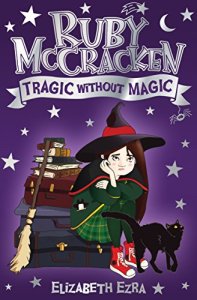 Whisked from a world of broomstick flyways and spider egg breakfasts into the mundane setting of Ordinary World Edinburgh, she’s every bit as underwhelmed as her non-magical classmates – until she realises that there is more going on than meets the eye.
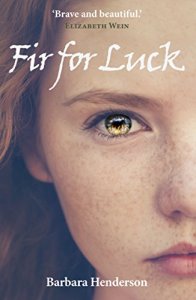 Events unfold through the eyes of 12-year-old Janet, who – frustrated at being left behind when the men and boys go away to cut thatch – finds herself playing an unplanned, but pivotal role.
 All about Argyll