Transformation for Lochawe landmark as The Tight Line becomes Ben Cruachan Inn

A Lochawe pub which was closed and boarded up for almost five years, re-opened on Friday (March 31) with a new name and a new look.

The Tight Line had been at the heart of village life for more than a century, as Loch Awe Hotel’s stables and coach house, then as a thriving cafe and bar – but after falling into decline, its doors closed in summer 2012.

BenCruachanbuilding

The completed Ben Cruachan Inn

After restoration, extensive refurbishment and the addition of accommodation, it has now opened as Ben Cruachan Inn.

Tracey Peedle, the project manager for Candleriggs Development (the company that owns the building) says they felt compelled to take the site on after watching it decay. “We would drive by and see what a state it was in, and think how sad it was, and how great it would be to bring it back to life,” she said.

While seeking to retain the building’s Victorian character, the new owners have made significant changes, increasing the depth of the windows to enhance the loch view, adding a front deck, creating a large open-plan bar area, and extending to incorporate five bedrooms.

They hope that as well as attracting tourists, the inn can regain its place as a community hub, and plan to offer coffee and afternoon tea and to encourage local events. The menu will use locally-sourced produce wherever possible and west coast ale, gin and whisky brands will feature prominently at the bar.

“It’s important to us that this is a welcoming place for locals and visitors – it will be completely accessible for all abilities, and we will be dog-friendly, family-friendly, and eco-friendly,” says Tracey. “We’ve got a great team of local staff who are really excited about being in the new-look building.”

After half a decade without a local, residents are also enthusiastic about having a village pub again.

Libby Cattanach was one of a group of Cruachan (The Hollow Mountain Visitor Centre) staff who were invited to call in after work on the opening night. “It has all been done really well,” she said. “the staff were welcoming and friendly and we enjoyed our tour.”

It was fitting that members of the Cruachan team were first to be served at the bar, as the power station and the pub have a long-standing connection.

Though the building was initially converted from a stable block to accommodate the staff of guests at Loch Awe Hotel, it became a pub after the Second World War, serving the influx of Hydro scheme workers. From the late-fifties onwards, it was filled with workers building Cruachan Dam and Power Station, who flocked there after a long shift on the mountain.

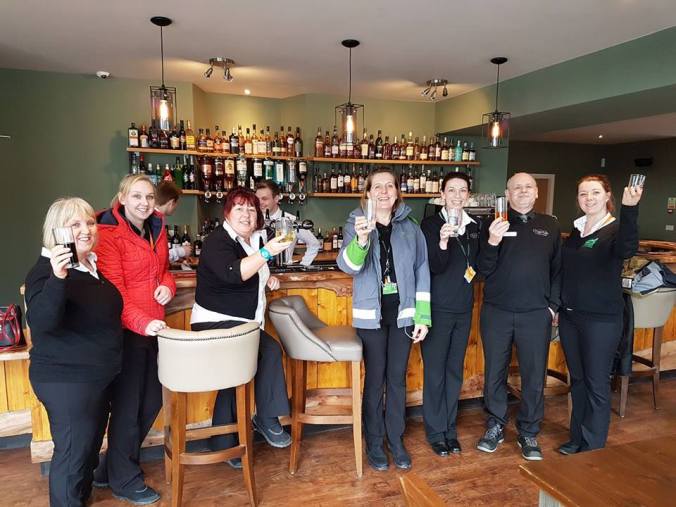
BenCruachanCruachanHollowMountainstaff

Staff from Cruachan, The Hollow Mountain, enjoy the first toast at the Ben Cruachan Inn bar

Alan Campbell, a Lochawe resident, lived upstairs in the Tight Line as a child in the late 1960s, when his mother, Mary, managed the cafe – then a separate room from the bar. He recalls the days when Lochawe was so busy that it not only supported two pubs (Carraig Thura and the Tight Line), it had four darts teams.

“There was a boom in the late Seventies and early Eighties, when Cruachan was being refurbished,” he recalls. “And for a long time after that you couldn’t get in on a Saturday at 5pm for all the fishermen. Bus-loads would come from Glasgow in the morning and be dropped off at different points around the loch – then they would all make their way back to the Tight Line to be picked up.

“There were some who came every week, and we got to know them so well that they seemed like locals – but when the loch was privatised the fishing clubs stopped coming”

Though Mr Campbell has fond memories of the old Tight Line, he is positive about what the new look pub can bring to the village.

“I think its a good thing that Lochawe will have a pub again,” he says. “The Tight Line may have been closed for five years, but locals feel we’ve been without somewhere to go out for even longer, because it got so run down. The fact that Ben Cruachan Inn is starting from scratch is fantastic – it’s a chance to win people over.”

Deer count leads to triple chopper treat

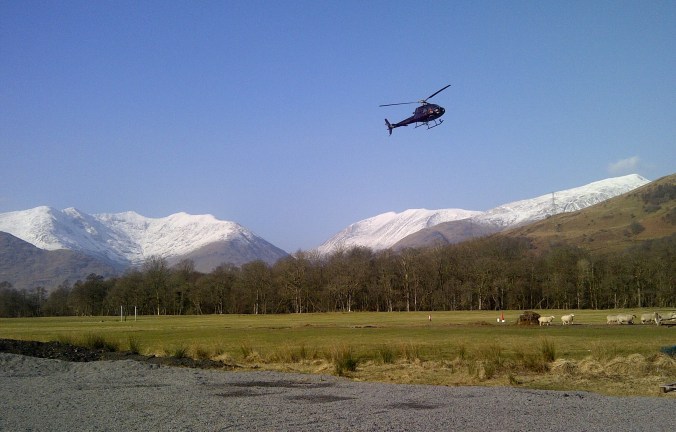
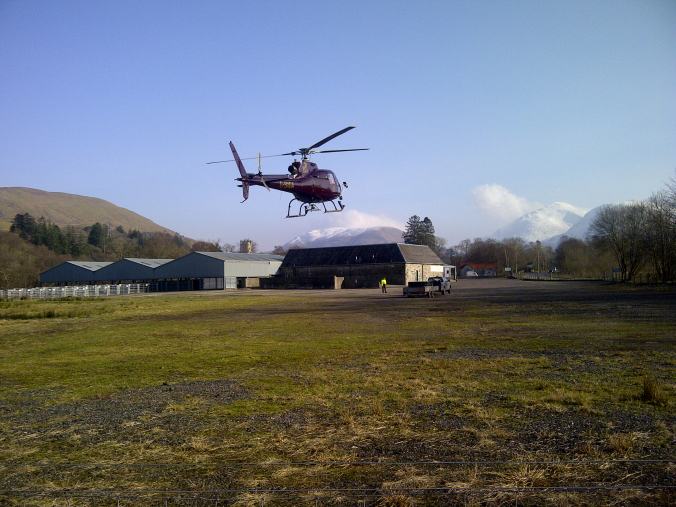
Dalmally children were treated to an unexpected half term spectacle (last week), when three helicopters used the Mart Park as a refuelling station.

helicopter-dalmally-shinty-field-cr

The trio of 350 B2 squirrels were based in the village on Tuesday (14 February) and Wednesday while they conducted an aerial deer survey that included estates around Crianlarich, Tyndrum and Inveraray, and ranged as far as Tarbet on Loch Lomond.

The research, by the Inveraray and Tyndrum Deer Management group, is part Scottish Natural Heritage (SNH)’s national programme and helps with decisions about habitat management and conservation. While all Scottish estates conduct annual ‘foot counts’ with teams working on the ground, a helicopter count such as this only happens about once a decade.

“A combination of local geographical knowledge, GPS and digital photograpy means we can now build up a pretty accurate picture of deer numbers,” explained Tom Kirsop, Head Stalker at Argyll Estates, who was one of the specialists on board. “The helicopters came from Inverness, and Dalmally was the ideal refuelling station, as there is plenty of space.”

The Mart Park location also created an “amazing” experience for local children on half term. They were able to safely watch the helicopters land from the neighbouring shinty field, while still getting close enough to feel the breeze from their blades.

img-20170214-01446

Grants can do Glenorchy good

As the spring deadline approaches for funding applications to Glenorchy and Innishael Community Council (G&I CC) local groups are being encouraged to apply and make the most of the chance to receive financial support.

moneytower

Thanks partly to contributions from local renewable energy companies, the community council has a ‘seed capital’ fund to help support and develop local good causes.

Grants, which are allocated at the council’s regular meetings, can range from less than a hundred pounds, to around £3,000, and the money could be spent on anything from building projects to equipment and training, so long as there is a tangible community benefit.

Recent beneficiaries have included the community orchard in Dalmally, and Portsonachan Village Hall’s lending library.

Members of the village hall committee in Bridge of Orchy, who are working to renovate and re-open the facility, last year received a grant of £820. This enabled them to pay critical initial fees: “The grant made a big difference at a crucial time, when costs were being incurred, but before major funders had come on board,” said committee member Lucy MacDonald.

Knit and Natter, a Dalmally-based craft and social group, received £250 to help their move from the old church hall, which was recently sold, to Dalmally Community Centre. “The grant enabled us to set up in the Community Centre, and we’re very grateful for it,” said Pam Gibson, a member.

John Kerr, Secretary of G&I CC said: “We would encourage any local group in need of funds to apply. Our main criteria for support is community benefit, so if you have a project that you can prove helps members of the local community, then there’s a good chance that we will be able to help you.”

Applicants are asked to complete a one-page form, which can be found online, and to submit it by Tuesday, March 7. “The application process is quite straightforward,” says Mr Kerr. “Our key request is that a representative of the group applying attends the next community council meeting, so that they can answer any questions that we might have.”

– To apply for a community council grant, residents must complete the short Grant Application Form, which can be downloaded from http://www.loch-awe.com/community-council, and return it to John Kerr, glenorchyb8074@gmail.com by March 7.

– In addition to its own funds, Glenorchy and Innishael community council also approves grants from the An Suidhe and Carraig Gheal wind farms. While applications to these funds should be made separately, the community council can provide advice and information to applicants who wish to be considered for them.

Dalmally Sheepfest gets off to a baarilliant start

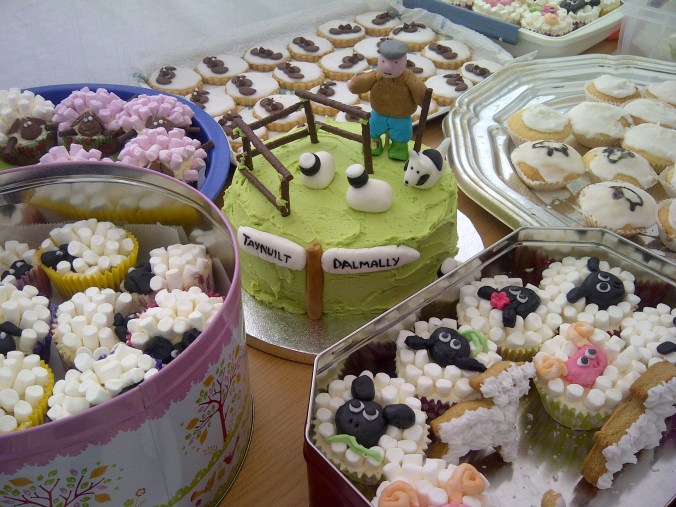
As farmers inside Dalmally Mart jostled to see a ram that sold for £100,000, in the field outside, you could get your hands on a prize-winning sheep for just £1 – though admittedly this one was covered in butter icing and decorated with marshmallows.
The range of sheep-themed home baking was one of the hallmarks of the first Dalmally Sheep Festival, which raised over £600 for the local primary school and playgroup.
sheepfestcakes

Dalmally Sheep Festival baking

The event, on Saturday October 15, coincided with United Auctions’ annual ram sale at Dalmally Market, and had a family focus, with arts and crafts, and even a ‘lamb pen’ for younger children to play in. Popular activities included face painting, making sheep masks and trying sheep shearing (by scraping shaving foam from a balloon).
Though wet and windy weather presented challenges (with some stall holders relocating to livestock trailers and vans for shelter) it didn’t perturb the stars of the festival, a visiting collection of Hebridean sheep.
Several local organisations were represented, including charities Mary’s Meals and Craig Lodge, and the local ‘Knit and Natter’ craft club. The cafe and craft stall were run by volunteers with all baking and drinks donated.
There was plenty for wool enthusiasts, with spinning demonstrations, an Earth Loom (on which anyone could have a go at weaving) and knitted and felted gifts for sale. An Asian yurt (a wood-framed shelter) contributed by Heartfelt at Dalmally Station, hosted a wool fibre sale.
Dalmally Sheepfest Wool Sack Race
The wool sack race which was scheduled to be part of Dalmally Sheep Festival (and was postponed due to bad weather) was run at Dalmally Community Centre on Saturday, as part of the village’s November 5 celebrations.
The event, which saw two teams of competitors carry a full wool sack from the Post Office car park to the entrance to Dalmally Village Hall, was a close contest, with the winning team over-taking the runners up only on the final stretch. The winning team members were by Llinos Proctor, Calum Proctor, Kelda Platt and Duncan MacDougall. Prizes were kindly provided by Fyne Ales.

Dalmally Sheepfest – a woolly good day out

Press release: An Argyll village is preparing to celebrate the contribution of its woolliest residents – with an event that’s all about sheep.

Dalmally Sheep Festival, from noon next Saturday October 15, coincides with the annual blackface ram auction, or ‘tup sale’ at Dalmally Mart, and will include activities for families, and local arts and crafts.

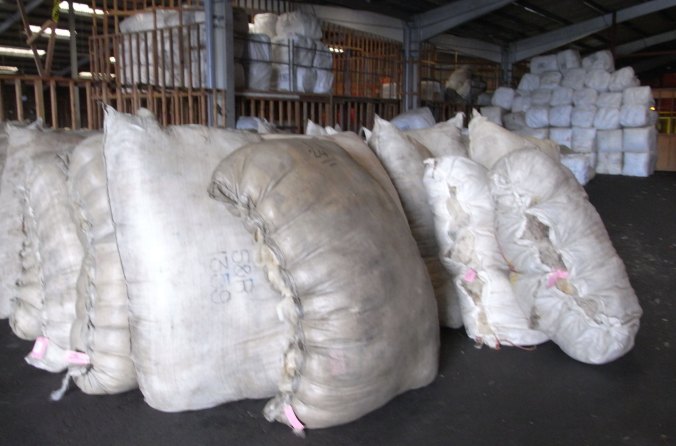
The highlight will be the Wool Sack Race, a test of strength and speed in which teams of four competitors carry a large, full wool sack across the village shinty field competing for glory, and a refreshing prize sponsored by award-winning local craft brewer Fyne Ales.

Sheep farming remains central to Dalmally’s landscape and culture, with the Autumn tup sale a key event in the Scottish farming calendar. The auction brings the best of the blackface breed, as well as hundreds of visitors, to the little village every year.

The festival has been set up to welcome these visitors and mark the occasion of the sale, raising funds for community groups and charities, including the local primary school and playgroup, who are hosting a cafe, children’s craft stall and sheep-themed games.

Wool is set to be a big feature of the day, with spinning demonstrations, an earth loom, and plenty of hands-on woolly experiences. The sheep theme will be explored further at the baking stall, which is appealing for donations, and offering a prize (sponsored by Cruachan: The Hollow Mountain Visitor Centre) for the best sheepish creation.

Anyone interested in having a stall or entering a team, or who would like to know more about the event, should go to www.facebook.com/dalmallysheepfestival, or contact co-ordinator Louisa MacDougall on 01838 200724.

  • Dalmally Sheep Festival, the shinty field, Dalmally, from midday on Saturday, October 15,

  • Contact louisa.mclennan@talk21.com 01838 200724 facebook.com/dalmallysheepfestival

Wool Sack Race highlight for Dalmally Sheep Festival

A wool sack race will be the highlight of the first Dalmally Sheep Festival

The event, which coincides with the annual blackface ram sale at Dalmally Mart, will take place on the local shinty field on Saturday, October 15.

woolsackpic.jpg

You want me to lift what?

The race will see teams of four, including runners representing community groups and local sports teams, carry a large wool sack the width of the field in a test of fitness and strength that promises to be as entertaining for spectators as it is demanding for competitors.

There are still spaces for teams to compete in the race, with the incentive of a prize sponsored by award-winning local craft brewer Fyne Ales.

For more information, or to take part, email louisa.mclennan@talk21.com, ring 01838 200724 or find Dalmally Sheep Festival on Facebook.

Dalmally Sheep Festival needs you

Saturday October 15th is the first Dalmally Sheep Festival.

argyll-and-bute-20160510-00362

Already getting excited about Sheepfest

The mini festival, which will be held on the shinty field, coincides with the annual blackface ram auction (the tup sale) at the Mart, and will celebrate the village’s role as home of one of the big events in the farming calendar.

With so many visitors expected for the day, it promises to be a good opportunity for some community fun and worthwhile fundraising.

All local organisations are invited to be part of the festival – whether raising money for themselves, raising awareness about their work, or just popping along to see what it’s all about.

How can we get involved?

Local organisations are invited to have their own table/stall, or to run a (sheep-related) game or activity.

There are several activities in the pipeline, including a wool sack race, fancy dress sheep parade, and a sheepdog challenge (more details soon). Organisers are on the look out for more ideas and family-friendly activities, and will soon be asking for teams to compete.

Individuals and businesses are also welcome to have a stall/table (businesses will be asked to make a donation at the end of the day).

What’s it for?

The tup sale brings lots of visitors to Dalmally every year, and it can be quite a spectacle. This year seemed like as good a time as any to view that day as an opportunity – to showcase our lovely villages and talented people, and to raise some money while having fun.

Any money your organisation raises, it will keep. Any money raised from the event in general will be split between Dalmally Primary School and Dalmally Playgroup.

What now?

If you have any questions, or would like to get involved, email louisa.mclennan@talk21.com, or ring 01838 200724.

Please share this post with anyone who may be interested, and please, come along on the day (The shinty field, Dalmally, on Saturday October 15th, from midday).

For updates, see the Facebook page: www.facebook.com/dalmallysheepfestival.

On the west Highland tree trail

Scotland’s woodlands are remarkable places, and they are home to incredible trees – ancient characters whose past is entwined with the communities beneath them. They have survived disease, development and disaster – if only they could talk, what stories they would tell.

rannochrowan

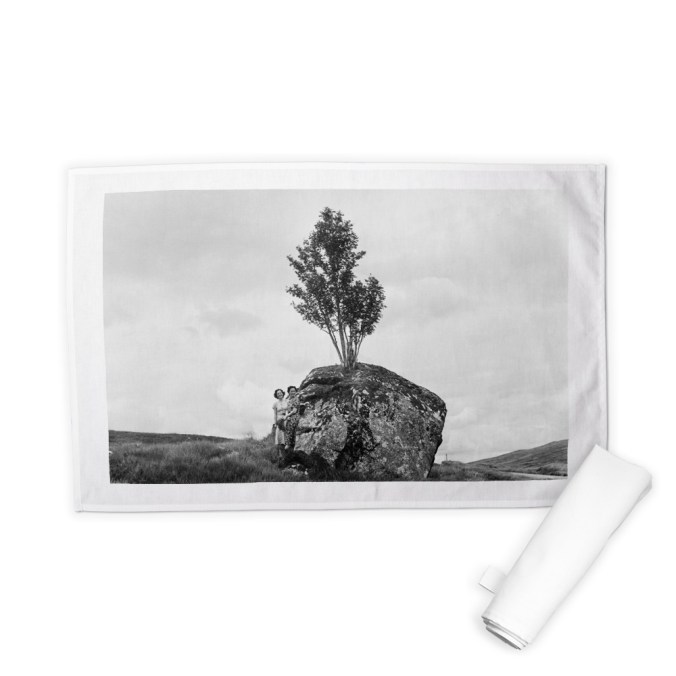
The Rannoch Rowan features on tea towels like this one from vintagephotosonline.co.uk

Some of our most significant trees are the star attractions at public gardens, but others simply stand at the roadside, or rest in a quiet glen.

Below are my favourites, five enchanting heritage trees from in and around the West Highlands.

  • The Forestry Commission and Edinburgh Royal Botanic Gardens recently launched a ‘tree trail’ celebrating some of the collections of great trees that can be enjoyed here. Find out more at www.treetrailscotland.com

The Fortingall Yew, Fortingall Churchyard, near Aberfeldy

Thought to be the oldest living thing in Britain, this European Yew dates back to at least Roman times (it is between 1,500 and 3,000 years old) and stands in the churchyard of the Perthshire village, protected only by a small wall.

By the 18th century it was already famous – partly because of the legend that Pontius Pilate was born beneath it – and it suffered considerable damage as locals cut pieces from it to make souvenir drinking cups and bowls to sell. Decay has further split its once enormous trunk into smaller stems so that it gives the impression of being several separate trees.

Abies Grandis, Ardkinglas Woodland Garden, near Inveraray

Scotland’s tallest tree at just over 64m, this Grand Fir has been crowned the tallest in Britain on several occasions, and estate staff hope that with good management it can grow it back to retake the top spot. The towering specimen was planted in 1875, and could have been brought to Argyll by Victorian plant hunters returning from expeditions in the Americas. Its neighbour on the beautiful banks of Loch Fyne is Abies Alba, a four-trunked European Fir with a ten metre girth that dates back to around the time of the Jacobite revolution.

Giant Redwoods, Benmore Botanic Gardens, near Dunoon

The stately Redwoods of Benmore were among the first giant sequoias to be brought to Britain, and celebrated their 150th anniversary last year, making them mere whipper-snappers by the standards of their species, which can live for thousands of years. Though 50 of trees were planted only 49 remain, one was lost in the storms of 1963. The lofty avenue is the showpiece at the entrance to the gardens, and guaranteed to make any mere human strolling below, feel very insignificant indeed.

Argyll Wishing Tree, south of Ardmaddy Castle, near Oban

The only tree on this list that is no longer alive, the Argyll Wishing Tree nonetheless deserves its place, and could be the most magical of all. A hawthorn that grew on a windy hillside (on the cattle drovers’ routes south from Oban), it was thought to be able to grant wishes, and many of those who passed it pressed a coin into its trunk for luck. Research is underway to establish the trees age and more about its age and uses. You can still see its remains – the bark encrusted with discoloured coins – today, though despite conservation efforts it is thought unlikely that the skeleton will last for long.

Horticulture enthusiasts can combine a walk to the tree with a trip to the vibrant Ardmaddy Castle Gardens.

The Rannoch Rowan, Rannoch Moor

A hermit in a desolate and beautiful landscape, this rowan appears to grow right from a boulder. Framed by mountains and sky, its lonely silhouette inspires many motorists crossing the A82 through Glencoe to stop and take photographs (though please take care if you do follow their example, this is a fast road). Its resilience in growing up through a crack in the rock is also the secret of its ongoing survival – the encased and elevated position protects it from the grazing sheep and deer whose appetites so often prevent moorland growth.

The gardeners who created the glorious gardens of Argyll

From Gigha’s vibrant Achamore Gardens to the celebrated Benmore, and the exotic treats of Crarae, Argyll’s gardens are more than just a pretty setting – each has its own story to tell. 
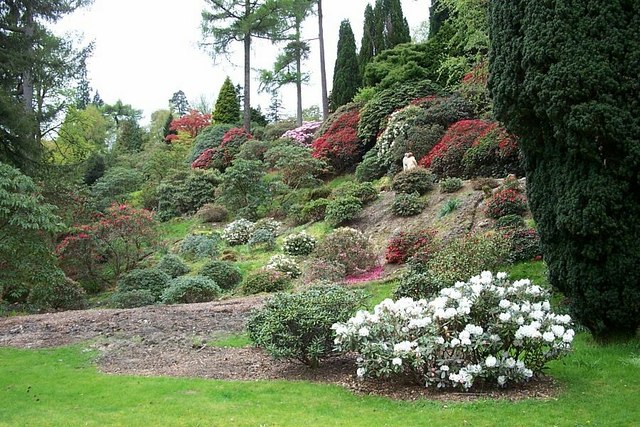
benmoreslopes.jog

Benmore Botanic Gardens, near Dunoon

It takes a man of passion to make a bold romantic gesture, and it doesn’t get much more romantic than Sir James Horlick’s tribute to his wife, Flora.

In 1931, twenty years after they were married, the war hero, hot drinks tycoon, and compulsive horticulturalist cultivated a new rhododendron, perhaps the finest in an already fine collection, and named in it her honour.

Today, the colourful ‘Mrs James Horlick’ can be seen on display at Achamore Gardens, at the couple’s former home on the Isle of Gigha.

It is a striking, hardy shrub, with eye-catching pink and white flowers that bloom in late spring. More than sixty years after her death in 1952, it remains one of the most popular plants in the collection, and one can’t help but wonder which of its characteristics the woman who inspired it shared.

Achamore Gardens was created by Sir James in the years after the Second World War. It is the jewel in the crown of the little, community-owned island of Gigha (which is a twenty minute ferry trip away from Tayinloan on the Kintyre peninsular).

The London-based baronet bought the estate in 1944, partly to provide a home for the already burgeoning Horlick Rhododendron Collection, and to enable him to grow more delicate species such as the white rhododendron maddennii, in its mild, virtually frost-free climate.

Building the garden was a challenge, but a rewarding one, as Sir James explained at a meeting of the Royal Horticultural Society in 1942. “I can only tell you that creating a garden out of this mess has given me the most enjoyable twenty years of my life, and certainly the busiest.”

Though it is constantly evolving, the site of which Sir James was so proud retains many original plants and features. Its highlights are the sunrise-hued azalea, camellia and rhododendron that he prized, but in the 50 acres of woodland and walled garden, there are plenty other of rare and interesting species to enjoy – thanks partly to a band of local volunteers who help maintain the grounds.

Achamore Gardens is just one of a cohort of spectacular public gardens in Scotland’s west highlands. Scenic hideaways in an already scenic land, their prevalence in this rocky landscape may come as something of a surprise.

IMG-20150518-01925

Oh help! Oh no! It’s the Ardkinglas Gruffalo

The western highlands are among the wettest, and sometimes stormiest, places in Europe – but visit any village in Argyll in late spring and you wade through the confetti of a hundred bright blooms.

The damp conditions and acidic soil in this rainy tip of Britain team with the warming influence of the Gulf Stream (an oceanic current) to recreate conditions not dissimilar to those found in the Himalayas. Thanks to the sheer pluck of the plant hunters who ventured into uncharted territory to source their plants and seeds, this has become rhododendron country.

The comparison with more exotic locations is particularly apt at Crarae, a National Trust for Scotland garden near Inveraray, on the banks of Loch Fyne, where water cascades down a steep glen bordered with vibrant species native to more humid lands.

Dubbed ‘Scotland’s Himalayan Gorge’, this garden owes more a handful of individual species to the influence of East Asia.

Its creator was Grace, Lady Campbell (the wife of the 5th baronet Archibald Campbell of Succoth) a gifted gardener with a particularly useful family connection – she was the maternal aunt of the audacious botanist Reginald Farrer, who spent much of his career collecting specimens in the mountains of Japan, China, and even Korea and Tibet.

From 1912 on, Lady Campbell began to establish the garden framework, introducing ornamental planting close to the family home at Crarae Lodge, and establishing woodland footpaths, with her famous nephew contributing some of the spoils of his adventures, including alpines, rhododendron and eucalyptus, and almost certainly lending his advice and expertise, particularly with regards to the rock garden, his specialism.

As Lady Campbell worked to exhibit Crarae’s international assets, a few miles west, on the Isle of Seil, a very different garden was set to be created, influenced by events and industry much closer to home.

In the early 1930s, Faith Celli, an English actress well-known for her performances on the London stage, came to Scotland to visit the empty distillery cottage that her husband, the politician and cavalry officer, Colonel Arthur Murray, had inherited.

The bleak coastal site must have seemed very isolated after the whirlwind of London society the wavy-haired Tatler cover girl, star of hit plays such as Dear Brutus and Peter Pan, would have been used to, but perhaps that was exactly she and her husband were looking for.

The Murrays kept the cottage and bought the neighbouring ones as well, and engaged the services of Thomas Mawson, the leading garden designer of the age, to transform what was unkempt hillside, into An Cala, a work of art in which many of the original trees and shrubs, including a mass of flowering cherries and azaleas, still thrive. (An Cala is closed for the 2016 season)

Where some would see the hillside setting as an obstacle, Mawson’s design embraced it, creating a series of terraces which became distinctive mini gardens, each with its own view across the sea to the Hebrides beyond – one was to become a rose garden, another contained a pool.

The Murrays’ arrival on the Isle of Seil came at a challenging time for the area, which had for the previous century been a hub of Scotland’s slate industry. Their garden project not only provided employment for former slate workers, it paid homage to the island’s critical resource, with its paths and the terrace walls made from Easdale slate.

Faith Celli was only to enjoy her garden for a short while, she died in 1942, just after a decade after it had been completed, but her husband, who kept extensive photographic and horticultural records, and subsequent owners, have continued to nurture and develop this exceptional outdoor space.

Scotland’s 20th century gardens owe much to the personalities who threw their energies into creating them, but there are also magnificent woodland gardens with their roots much further in the past, and their ambassadors are characters even more enchanting than those previously described.

Enter the vast Benmore Botanic Gardens, near Dunoon, and you find yourself dwarfed by an avenue of Giant Redwoods – and they are just the start of what this vast garden has to offer. The seeds of these majestic sentries were among the first of their kind to arrive in Britain, more than 150 years ago.

Explore the snaking paths around Ardkinglas Woodland Gardens, at the head of Loch Fyne, and you enter the world of Julia Donaldson’s celebrated picture book, The Gruffalo – the theme for a recently opened trail which has turned an already magical location into an accessible and entertaining family day out.

The fictional characters (a mouse, a fox, a snake and an owl) share their new home with real red squirrels a collection of champion trees, including a Grand Fir which is the tallest in Scotland.

The elder statesman among these trees is the charismatic Abies alba, a European Silver Fir with a girth of nearly ten metres and a remarkable four-trunked form, probably developed as a result of poor early management.

Thought to have been planted in the late 1700s, it was reported as “the mightiest conifer in Europe” back in 1905 – before the first spade sliced peat to create some of the other, now historic, gardens described above.

The remarkable trees of Ardkinglas are overlooked by an inspired recent addition to these gardens that helps put its senior citizens’ worth into perspective. The scriptorium, a gazebo-like structure on the hillside, is made from Argyll Oak, engraved with a selection of stirring quotes, from sources ranging from Spike Milligan to the bible, about trees.

One of the most direct, from Voltaire, reads “Il faut cultiver notre jardin” or “We must cultivate our garden.” It might have been written as a mantra for the West Highlands’ green fingered architects whose labours still bring so much pleasure today.

  • Benmore, Crarae and Ardkinglas Gardens are part of the Scotland’s Gardens scheme, which raises money for charity by opening gardens of horticultural interest to the public. www.scotlandsgardens.org

Twins: Double trouble but double the cuddles

The pitter patter of two pairs of tiny feet is cause for a special celebration, but with that joy comes extra anxiety – a fact which has led twin parents in Argyll to set up their own support group.

Multiple pregnancies carry an increased likelihood of prematurity and illness for the babies, and a greater risk of post-natal depression for mothers. In a rural location, those challenges can be compounded by isolation and a lack of facilities.

newborntwins2

Babies are very demanding in the early stages, and tackling two unhappy, crying babies on your own can be stressful, especially in the public eye,” explains Laura O’Donnell, who is mum to ten-month-olds Evan and Grace. “The twin group is great for me and my children – it means I can get out and socialise confidently with people who also have ‘double trouble’ to contend with.”

Visit the group, which meets monthly in the Early Learning Centre facility at Oban’s Park Primary School, and you quickly gain a sense of the juggling act that can be twin parenting.

Crayons, blocks and sensory fabrics are scattered as matching toddlers wobble and climb in opposite directions, and one baby demands feeding as its sibling requires a nappy change.

There’s a sense of camaraderie though, and a pair of hands can always be found to give a bottle, a cuddle, or make the tea.

Mums started the group earlier this year with the aim of providing some peer support, particularly in the intense early days. While there are twin clubs in towns across Scotland, there was nothing nearby to connect multiple parents.

There is plenty of chat about toddler quirks and the best twin-friendly gadgets, but swapping experiences is central, particularly as many twin families share traumatic early days – almost half of twins born in the UK need some special hospital care.

My babies were eight weeks early and spent three weeks in special care,” says Leanne Stewart, mum to one year olds Callum and Alyssa. “I had one baby home before the other which I was not prepared for at all. The guilt of leaving Callum still eats at me today.”

Laura’s twins were also premature, arriving six weeks before their due date. They needed to be in the hospital’s special care unit initially, but an improvement in Grace’s condition meant they were separated.

Grace started coming on leaps and bounds, so she came up on the ward with me,” she says, “but Evan was still struggling with feeding. The hospital told me to leave with Grace the next day and I just about cried that whole day and night.

Amazingly Evan made such a huge improvement with his feeding that day and during the night that the doctors allowed him to leave with us, thank goodness.”

Getting told we could take them home on day 15 was amazing,” says Fiona Elder, from Lochgilphead, whose eight-month-old twins Seamus and Jock were born seven weeks early and spent the first week of their lives in incubators. “It meant the next chapter of the journey could begin.”

Alongside the challenges, twin mums and dads also share the excitement of their children’s interactions, whether it’s holding hands and giggling together for the first time, or swapping pieces of their dinners. “All the nice things, like smiles and cuddles, are doubled,” says Leanne.

Seona Laird, mum to Andrew and Alexander, agrees. “I feel so lucky to have two,” she says. “There are enough cuddles for everyone. It’s double the joy when you watch one smile, and then after a while you see the other one smile too.”

The fact that many of the twins at the group had fragile starts to their their lives, makes the celebration of each first step all the happier. “The best thing about being a twin mum is knowing I’ve raised two healthy babies,” says Laura. “We had these teeny newborns in incubators with tubes and wires, and now I have two strong, happy little people – its such an amazing feeling.”

Help and information about twins and multiples is available from www.tamba.org

For more information about the twin group in Argyll, contact argylltwins@hotmail.com