Two glacial giants dominate the landscape around the villages of Lochawe and Dalmally – Ben Cruachan mountain, above, and Loch Awe, below.
Cruachan is a popular challenge for serious hikers and ‘munro-baggers’, who start their ascent at the Falls of Cruachan station, but its gentler slopes, which boast spectacular loch views, are also accessible if you follow the dam road from St Conan’s Road in the village of Lochawe.
Set into the mountain, the distinctive arches of the concrete dam at Cruachan Power Station can be seen from several miles away. This remarkable power station generates energy via a man-made loch high on the mountain. A visitor centre explains the technicalities and offers tours into the turbine caverns at the hollow mountain’s heart.
Loch Awe, Scotland’s longest freshwater loch, is said to have provided inspiration for the recent Disney hit Brave. Several historic buildings stand on its banks, including Loch Awe Hotel, the much-photographed 15th century Kilchurn castle, and St Conan’s Kirk, in Lochawe, with its eclectic design and gargoyles that include dogs, hares, and even the face of its architect, Walter Campbell.

St Conan’s Kirk, Lochawe
The best views of Loch Awe, however, can be found in the nearby village of Dalmally. From the historic station (worth a look for its craft shop and exhibitions) and follow signs for the Monument, and you’ll reach a hilltop memorial to the local gaelic bard Duncan Ban Macintyre (celebrated for his verse, despite the fact he never learned to read and write.) On a glorious day, the spot is enough to inspire even the least likely artists to compose poetry.
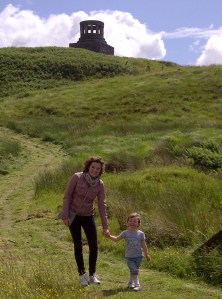
The Monument, Dalmally
Dalmally is also known for its auction mart, celebrated particularly for the annual blackface ram sale each October, when the best tups can fetch prices into hundreds of thousands. Though not officially a tourist attraction, a sale is quite a spectacle, and it’s well worth stopping by if you have an interest in farming.
Taynuilt
Taynuilt is a thriving village, with a hotel, post office, grocer, tea room and plenty of community spirit.
Though there is no sign of it from the main road, or even the main street, the village sits on the shores of the beautiful Loch Etive, and boasts some of the prettiest little beaches in the region – though they hardly ever get busy.
Follow signs for Airds Bay for a short, peaceful walk on the pebbly loch shore, and views across to Bon Awe quarry, which once supplied stone for the cobbled streets of Glasgow, or go through the village centre and head for the iron furnace to find the pier.

Loch Etive from Taynuilt
Alternatively head away from the water, to the lovely, undulating Glen Lonan to enjoy rural Argyll at its finest (stop at the restful Angus’ garden if you have time)– just keep a look out for livestock crossing the road.
Taynuilt is also home to the well-preserved ruin of Bonawe Iron Furnace which used charcoal from local forests to process pig iron (named because it was shaped in blocks that looked like piglets) in the 1700s, except during the Napoleonic wars, when it produced cannon balls.
On the bank of the River Awe, a couple of miles east of Taynuilt, is Inverawe Country Park, with the adjacent Inverawe smoke house and visitor centre. Here, you can combine a country stroll (maps with suggested routes are provided) with refreshment, or the chance to learn a little about the local fishing industry – and in early Autumn it’s a great place for blackberries.
Just outside Taynuilt, the road that is now the A85 slices through the Pass of Brander, whose narrow shape hints at its historic significance. The route, the perfect spot for an ambush, was the scene of a bloody battle in the 1300s, in which King Robert the Bruce defeated the MacDougall clan.
Getting there: From Glasgow, take the A82 towards Crianlarich, then, at Tyndrum, take the A85 towards Oban. Trains from Glasgow Queen Street to Oban call at Falls of Cruachan and all three villages.
 All about Argyll