Travel to Coll and discover an island that’s anything but sleepy – why close your eyes when you could be gazing at the stars!
The first time you see a basking shark, you could be forgiven for believing that you have encountered something more sinister. The encroaching silhouette – three pointed shapes emerging from the sea – suggests the dorsal fins of a monstrous predator.
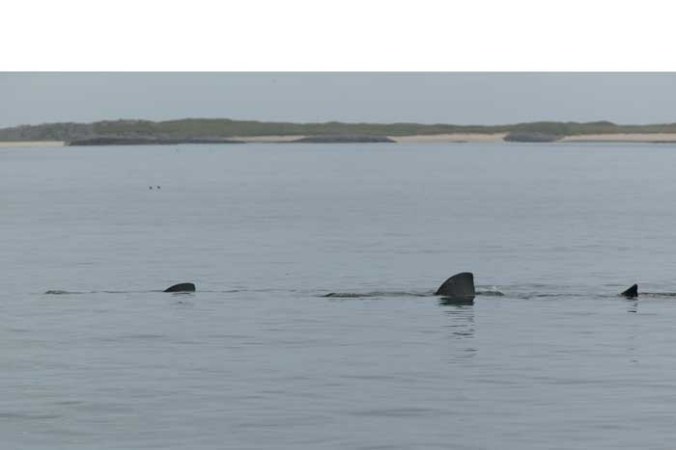
Basking shark off the Isle of Coll, by Colin Speedie
While an encounter with this giant fish, which has been mistaken for a Great White shark, may produce the instinct to run in the opposite direction, my own first sighting – on a magical evening in Hough Bay on the Isle of Coll – had the opposite effect.
The clarity of light in the Hebrides at dusk is often remarkable, and I was enjoying the sunset on the crescent-shaped beach, when three ‘fins’ (in fact the tail, dorsal fin and grotesque top jaw of a single plankton-feeding fish) emerged from the sparkling water, about 50m away.
Over the course of half-an-hour, at least eight more sharks – each around five or six metres long – appeared, until the shoal spanned the length of the bay. One of the attractions of this sparsely populated island is that an explorer can relish the scenery in solitude, but this was an experience I wish I could have shared.
A growing number of basking sharks have been sighted near the coast off the Isle of Coll – a fact that scientists attribute to the density of food in the area. The appeal of this endangered species is that you don’t have to take a ‘shark-watching’ tour to see it in its habitat, visit Coll and its neighbour Tiree between late spring and late summer and if you watch the water in calm weather, you have a good chance of seeing one from land.
One of the least-visited of the populated Hebridean islands, Coll is a three-hour ferry trip from Oban, in Argyll. The island has retained its outpost character (if you pass someone on the single-track road, it’s a requirement to wave and smile) despite regular summer ferries, and flights from Oban which mean these days it is a viable weekend destination.
Much of the island is an RSPB reserve, dedicated to the preservation of the coot-like corncrake, and the fragile coastal ecosystems in which it thrives. The society, which operates tours from its Totronald visitor centre, works with farmers to protect and increase the bird population, creating ‘corncrake corridors’ of longer grass around the fields as cover for when the migrants first arrive from Africa.
As a visitor, you might see a corncrake, but you are more likely to hear it, and you’ll know if you have – their ‘crex-crex’ call is a noise akin to long fingernails scraping a metal comb.
The wet and windy winters on Coll may be challenging, particularly when high seas prevent the lifeline ferry from docking, and the midges (though no worse than elsewhere in west Scotland) can be vicious as it gets warmer, but whatever the season, there’s plenty for outdoor enthusiasts, who can explore by bike (available to hire from An Acarsaid Gift shop) as well as on foot.
The island’s brilliantly designed village hall, An Cridhe (the Heart), is a hub for both culture and sport, and is the venue for events including the island’s bird festival, and Music Coll, a training and performance week for talented young musicians.
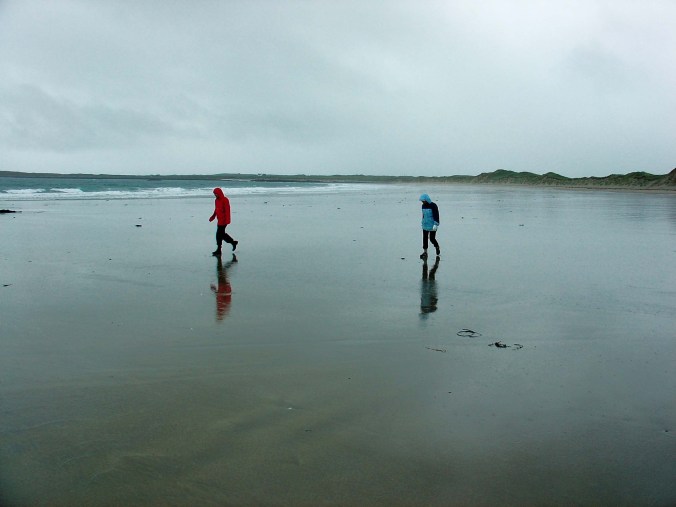
Ballyhough beach
The island is captivating in spring, when it is carpeted striking yellow from millions of iris and daffodils; and summer, when the light evenings go on forever, and the land is tinged the red and pink of the rocks and the heather, but autumn – when most visitors have gone – is the best time to experience the drama of the coastline.
Because it has virtually no light pollution, Coll has achieved ‘Dark Sky’ status, an official confirmation that it is one of the best places in the world for stargazing (and set to be celebrated in the Coll and the Cosmos stargazing weekend this September).
It takes determination to reach Coll’s beaches, most of which are not accessible by road, but each is a treasure trove, from the tiny Gortan, in the west, where a wooden shipwreck is embedded in the sand, to Cliad, near the rough-and-ready golf course, where seals bask on the rocks and you might spot an inquisitive otter, and Breacachadh, where children can go rock-pooling in the shadow of two castles.
The beaches also present a chance for younger readers to explore the world of Katie Morag, heroine of the CBeebies TV show, and Mairi Hedderwick’s popular children’s books, which are set on Coll.
For views, the dunes and cliffs around Feall (pronounced Foil) in the west and the rocks at Sorisdale at the east end are worth a walk, but the most imposing scene is from the peak of the island’s hill, Ben Hogh, where you can make out the shapes of the Treshnish Isles, including the distinctive ‘Dutchman’s Cap’ and on a clear day can see as far as the Small Isles of Eigg, Muck, Rhum and even to Jura and Skye.
If a day out in the elements inspires you to make the most of the plentiful natural resources, it is possible to fish for your supper – freshly caught local mackerel is delicious. Or why not collect mussels? There’s some local debate about the best sites, and a curious visitor should be able to charm one of the Collachs into sharing a favourite spot.
The easy alternative to doing it yourself is a night out at one of Arinagour’s two restaurants, which both use fresh, sustainable local produce. The island’s population may only be a couple of hundred, but residents of entire cities are less fortunate in their choice of quality, affordable eateries.
The cosy Island Café (with ethical shop attached) boasts an organic, fair trade menu that can include Thai and Chinese food, as well as traditional fare. The food (which includes local Hebridean lamb) is always delicious, the fire is always lit, and the welcome is just as warm.
If you happen to have access to a helicopter, you can put in your order for dinner from the Coll Hotel, which has its own helipad overlooking the bay, and go this afternoon. It’s worth the trip, the hotel’s restaurant repeatedly wins plaudits for its seafood, but visitors are warned to leave room for the tasty desserts too.
The tiny hotel bar is also the village’s only pub, but if you’re looking for the sort of sleepy rural boozer where you can sit in a corner and enjoy your whisky, you might be in for a surprise.
This is the island’s social hub and it is often, though not always, startlingly awake. You can never be sure what turn the night will take, or who you might meet, from the volunteer fire brigade after training, to a stag party, or members of the community centre committee – and it’s not unheard of for one individual to represent all three.
There is no Tourist Information Office on Coll, and no need for one. The answer to every question you might have is available free from anyone you meet in the shop, the post office, the pier, and particularly the pub, where hospitality flows freely and conversation is compulsory. One thing is certain – you won’t be sitting in that corner for long.
Information
Travel: Trains and Citylink coaches to Oban from Glasgow run approximately three times a day. Information about flights should be available shortly. Caledonian Macbrayne (www.calmac.co.uk ) ferries to Coll are daily between March and October and otherwise three times a week, weather permitting. Coll’s petrol station is closed on Sundays, afternoons and non-boat days.
Accommodation: Coll Hotel has en-suite rooms. Tigh na Mara is the main guest house and also offers an excellent afternoon tea. Coll Bunkhouse provides hostel accommodation in Arinagour, and larger groups can also book catered hostel-style accommodation at the Hebridean Centre, home to the charity Project Trust.
Basking sharks: The Hebridean Whale and Dolphin Trust (www.hwdt.org) and Marine Conservation Society (www.mcsuk.org) conduct basking shark research and visitors are encouraged to report any sightings to one of them.
RSPB: Coll Reserve Guide
Links and information: For island news, photographs, an overview of attractions and details of self-catered cottages, B&Bs and caravans for hire, go to visitcoll.co.uk. .
 All about Argyll
I am just back from a wonderful week on the paradise that is The Isle of Coll. It was everything you have written. It is idyllic, unspoilt, nature at its best.
I highly recommend Aroll House, self catering for up to 15 (I think) , luxurious, with the most perfect patio from which to soak up the sunset.
We will be back, maybe even in August for the half marathon weekend festival.
I love Coll ❤
LikeLiked by 1 person